As iron sharpens iron, so one person sharpens another. Proverbs 27:17 (NASB)
One of the first exports from Franklin County when this part of Virginia was settled was iron. The town of Rocky Mount, the county seat, was established near the location of the “Washington Iron Furnace”. The community would later gain a reputation for exporting agricultural products, lumber, “Black Prince Overalls” and “Bald Knob Furniture”. In the last century our reputation as “Moonshine Capital of the World” became a part of popular culture.
The area has also produced some distinguished people. Statesmen, clergymen, soldiers, entertainers, lawyers, doctors, athletes, and artists have been born or lived here. A surprising number of educators from Franklin County have had a disproportionate impact on the nation and the world.
Samuel H. Smothers was born in 1833 to a free woman of color named Jane Smithers, who baked bread to earn a living in Rocky Mount. When Samuel Smothers was born in Franklin County, Andrew Jackson was President of the United States. The same year J.E.B. Stuart, the future Confederate Cavalry General, was born in Patrick County, just a few miles away. The two men were born into different worlds.
To be born with dark skin for most men in the South in those years was to be born into slavery, but Virginia law at that time said that a child born to a free woman inherited her status, so the son of Jane Smithers was free from birth. A free man of color, however, faced enormous challenges.
Sometime in the 1840s Smothers made his way North, seeking opportunities that were unavailable to a free black man in Virginia. In Indiana he attended school at the Union Literary Institute, a school founded in 1846 by Quakers and free African Americans for the education of black and white children. Smothers was hired as a schoolteacher and eventually became principal of the Institute, where during the Civil War he edited and wrote articles for a magazine called “The Student’s Repository: A Quarterly Periodical, Devoted to Education, Morality & General Improvement.” “The Student’s Repository” had a nationwide circulation.
In 1864 Smothers felt he needed to personally join the fight for freedom, and enlisted in the United States Army. He served in the 45th U.S. Colored Infantry regiment, which participated in the battles of New Market Heights, Chaffins Farm, Fort Harrison and Fair Oaks in late 1864. On March 4, 1865, the 45th marched in the parade at President Abraham Lincoln’s Second Inauguration in Washington, D.C., the first African American military unit to be assigned that duty.
The 45th fought outside Richmond and Petersburg in 1865, and helped pursue the Confederate army to Appomattox, where General Robert E. Lee surrendered to Union General Ulysses S. Grant. Two months after the surrender, the regiment boarded steamers that carried the soldiers to New Orleans, on their way to guard the Texas border with Mexico.
Honorably discharged in late 1865, Smothers was living in 1870 with his wife Eunice and their young family in Shreveport, Louisiana, where he taught at a school established by the Freedmen’s Bureau. He taught others to teach. The family moved to Texas, where Smothers was elected Tax Assessor of Harrison County. Living in Texas after 1880, Smothers started a newspaper for the black community and founded the first high school for black students in Dallas. He published the “Baptist Missionary and Educational Journal” and founded the Harrison County Normal School for educating future teachers.
In a speech he gave in 1880, Smothers articulated his strong belief in the value of a good education:
“We should remember that knowledge is power and ignorance is weakness. The protection which we most need is the power which education and prosperity gives. For my own part all I ask of any man is an equal chance, and then if he can outstrip me in the race of life let him do it.”
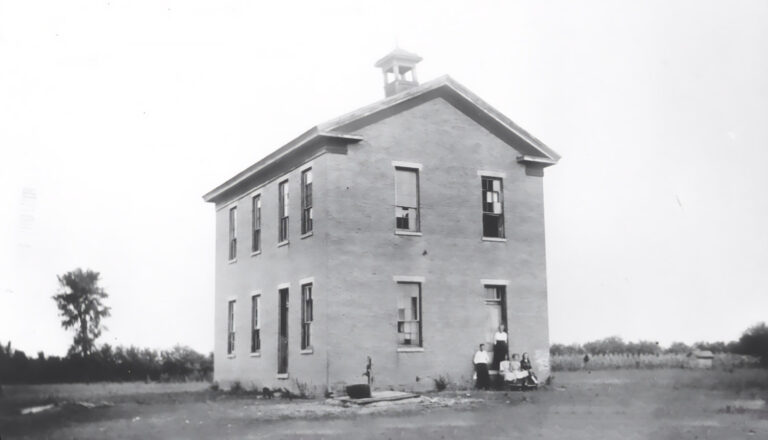
Smothers dedicated his life to teaching others and helping them to unlock the opportunities an education could provide. No image of him is known to exist, but he was 6’ 1” tall, had dark skin, and must have been an imposing figure. As a teacher and a teacher of teachers, Samuel H. Smothers likely impacted hundreds – if not thousands – of lives.
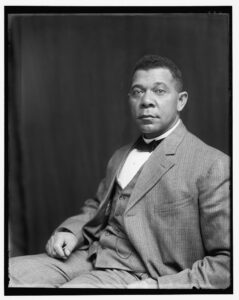
Booker T. Washington, educator and founder of the Tuskegee Institute in Alabama and author of “Up From Slavery” was born in Franklin County in April 1856. His family lived as slaves on a plantation owned by the Burroughs family. Woodrow Wilson, who would become the 28th President of the United States, was born that same year in Staunton, Virginia, a little over a hundred miles away. When freed at the end of the Civil War, Booker was nine years old. His mother, Jane, took the family to Malden, West Virginia and married a man who had escaped there during the war. The family lived in grinding poverty.
As a child Washington went to work in the salt furnaces and coal mines of West Virginia. He began teaching himself to read, and for the first time in his life was able to attend school. When required to give a last name as he registered, he picked the surname Washington, later learning that his mother had named him “Booker Taliaferro” when he was born. For the rest of his life, he would give his name as “Booker Taliaferro Washington.”
Washington’s family attended the African Zion Baptist Church in Malden. For a time he taught Sunday School there. At age sixteen he heard about a school for African Americans in Hampton, Virginia and walked 400 miles to enroll. He was able to earn admission by cleaning a room, and paid his tuition and board by working as a janitor for the school until he graduated at age nineteen.
Washington believed in the value of work for its own merit. He also believed that mastering skills in agriculture, mechanics and other trades should accompany academic education. He believed that the best way people could overcome prejudice was to make themselves useful to others and become responsible citizens.
At age twenty-five, Booker T. Washington was recommended by the president of Hampton Institute to become the first leader of the Tuskegee Normal and Industrial Institute, a school for African Americans that was to be founded in Macon County, Alabama. The school opened in July 1881 in a room donated by a local church. The rest of his life was devoted to promoting the success of the Institute. He taught and led the administration of the school. After classroom hours he helped clear land to raise crops to feed the students. He travelled to speaking engagements all over the country to raise funds.
Washington taught that work is honorable. If you want to be valued, make yourself valuable. Success in life has more to do with hard work than luck. “The individual who can do something that the world wants done,” he said, “will, in the end, make his way regardless of his race.”
During his lifetime Washington was criticized by some of his contemporaries as being too accommodating to white people. Some early civil rights leaders favored a more confrontational approach to gaining equality. Given the era in which he lived, however, it is hard to imagine how he could have done more for black people – and for humanity in general – by living and teaching differently. Considering the obstacles he faced so soon after the end of slavery, his approach was brilliantly successful. He wrote, “I early learned that it is a hard matter to convert an individual by abusing him.”
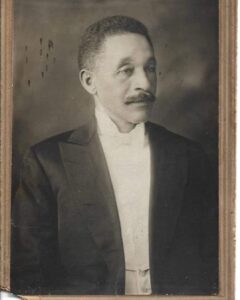
Byrd Prillerman was born into slavery in 1859 in the tiny community of Shady Grove, near the southern border of Franklin County. When Prillerman was born, James Buchanan was President. That same year, Henry McCarty was born in New York City. McCarty would later become infamous as a Western outlaw nicknamed Billy the Kid.
After emancipation at the end of the Civil War, Prillerman’s family lived briefly on a rented farm in Patrick County. When he was nine years old, the family walked 250 miles to settle in Malden, West Virginia. In 1871 he began attending school. Eight years later he became a schoolteacher. He graduated from Knoxville College in Tennessee and taught school in Charleston until 1892. At that time the only school for higher education for African Americans in West Virginia was Storer College in Harper’s Ferry, a private school.
In 1890 Prillerman met with West Virginia’s Governor and Superintendent of Education to propose the establishment of a new state school for African American students. With their encouragement, Prillerman and clergyman C. H. Payne successfully lobbied the West Virginia legislature for funds. When the West Virginia Colored Institute opened in 1892, Prillerman was appointed head of the English department, and in 1909 he became President of the school. In 1915 the school was made a college, and the name changed to West Virginia Collegiate Institute.
On retiring as President, Prillerman continued to serve as President Emeritus and took a leadership position in the West Virginia Sunday School Association. He was a Vice President of the West Virginia State Baptist Convention, a trustee of the National Training School for Women and Girls in Washington, D.C. and helped organize the West Virginia Teacher’s Association.
Byrd Prillerman worked tirelessly to build and promote the West Virginia Collegiate Institute, the Sunday School Association, and in support of the many other causes in which he believed. Beginning in the 1880s his name appears more and more frequently in newspapers around the nation, a featured speaker at teacher conferences and Baptist conventions. Like his friend Booker T. Washington, Prillerman believed students should learn industrial skills as well as academic ones.
A recurring theme in Prillerman’s speeches was the importance of home ownership. He often said “A well painted two-story house owned by a Negro is sharper than a two-edged sword.”
Born in Franklin County during the time of slavery, the three men would grow up to share many of the same beliefs. Facing similar challenges in life, they came to many of the same conclusions. All believed that African Americans would achieve their highest successes by contributing to the success of the nation, becoming good citizens, working at useful trades, paying taxes, and living responsible, productive lives.
Significantly, the lessons they passed along to others are meaningful today, and not just to African Americans. We need to help others. We need to behave morally and be good citizens. We need to be financially responsible. Others won’t always be nice to us just because they should be – but if we can do something they want done and we are willing to make ourselves useful to them, we will win their respect. Smothers, Washington, and Prillerman all believed in the value of hard work, and in the value of learning technical skills in addition to academics. All were active Christians. All were patriotic, despite the challenges that confronted them in the United States. All believed they could make a positive difference – and they did.
Washington and Prillerman were close friends; it is possible that both were familiar with the writings of Samuel Smothers. Smothers was almost certainly aware of Washington’s accomplishments, as they were highly publicized, and he may also have been aware of Prillerman’s career.
Samuel H. Smothers was born somewhere in or near Rocky Mount, Virginia possibly on a twenty- three-acre parcel of land near the Pigg River southeast of town owned by his mother.
In the northeastern part of Franklin County off Route 122, The Booker T. Washington National Monument preserves most of the farm where the founder of Tuskegee Institute was born.
Byrd Prillerman was born in the small community of Shady Grove, near the southern border of Franklin County, between the Snow Creek and Figsboro communities. The exact location where is family lived is lost to time.
Samuel H. Smothers, Booker T. Washington and Byrd Prillerman were born into conditions of inequality, grinding poverty and almost nonexistent opportunity. They had to be strong as iron. Through hard work and force of character, they overcame the limited circumstances of their birth and helped to create a better America. As iron sharpens iron, these men taught others. The lessons they taught about hard work, faith and character are as applicable now as they ever were – to people of all races. Their greatness comes from the timeless, valuable lessons they had to teach and the examples they set for all humanity.